


Why teambuilding is important
Why teambuilding is important
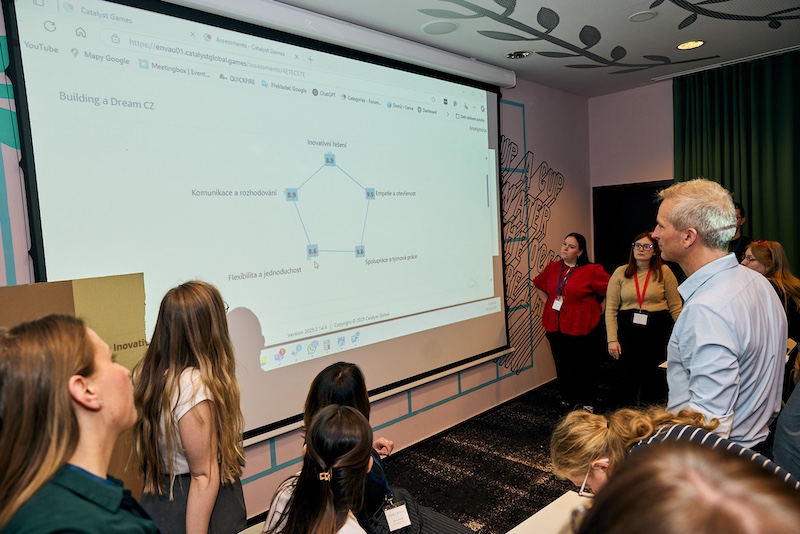
Teambuilding is sometimes seen as just a nice addition to the work schedule or a reward for employees. However, it can be much more: an important tool for the development of teams and individuals. If it is well designed, it creates a space in which it is natural to show how people communicate, cooperate, make decisions, react to pressure, and prepares them for new work challenges such as adapting to change or finding compromises. This happens in situations similar to regular work duties, but in a more relaxed atmosphere and often in a different environment.
Changing the dynamics is one of the greatest benefits of teambuilding. People get out of their daily roles, routines, and established communication patterns for a while. Thanks to this, you can see yourself and your colleagues from a different perspective. The team as a whole can reveal where misunderstandings arise, where energy is lost, or why some decisions are made more complicated than necessary.
A well-chosen activity acts as a safe mirror of team dynamics. It’s not just about having fun or “getting the job done.” Real success comes when the activity meets the needs of the team and has a clear purpose: to achieve cooperation, improve communication, build trust, or show how it addresses change. But experience alone is not enough; reflection is essential, helping to transform the experience into practical learning.
It’s a guided look back at what happened during the activity. In this part, team building becomes a real development tool. The team names what worked, where obstacles arose, how communication took place, and what can be transferred to everyday cooperation. A well-conducted debriefing promotes openness, shared understanding, and the ability to learn from one’s own experience.
The role of the facilitator is also very important. A good facilitator does not come with a ready-made judgment or simple advice from the outside. He or she helps the team gain perspective, asks questions, connects observed behaviour with work reality, and creates a safe framework for discussion. Thanks to this, you can see your own situation as a system of relationships, habits and expectations that can be consciously worked with.
Teambuilding is therefore not a goal in itself. It is an opportunity to create a situation in which the team can stop, experience cooperation in different conditions and then name it. If a suitably chosen activity, a clear development plan and a quality debriefing are combined, space for concrete change is created: individuals better understand their influence on the team and thus better understand their own dynamics.
This is precisely why teambuilding has a firm place in modern organizations. Not because it takes people away from work for a while, but because it helps them work better. It allows the team to experience, reflect and understand their own cooperation in an environment where there is more room for perspective, experimentation and open communication.